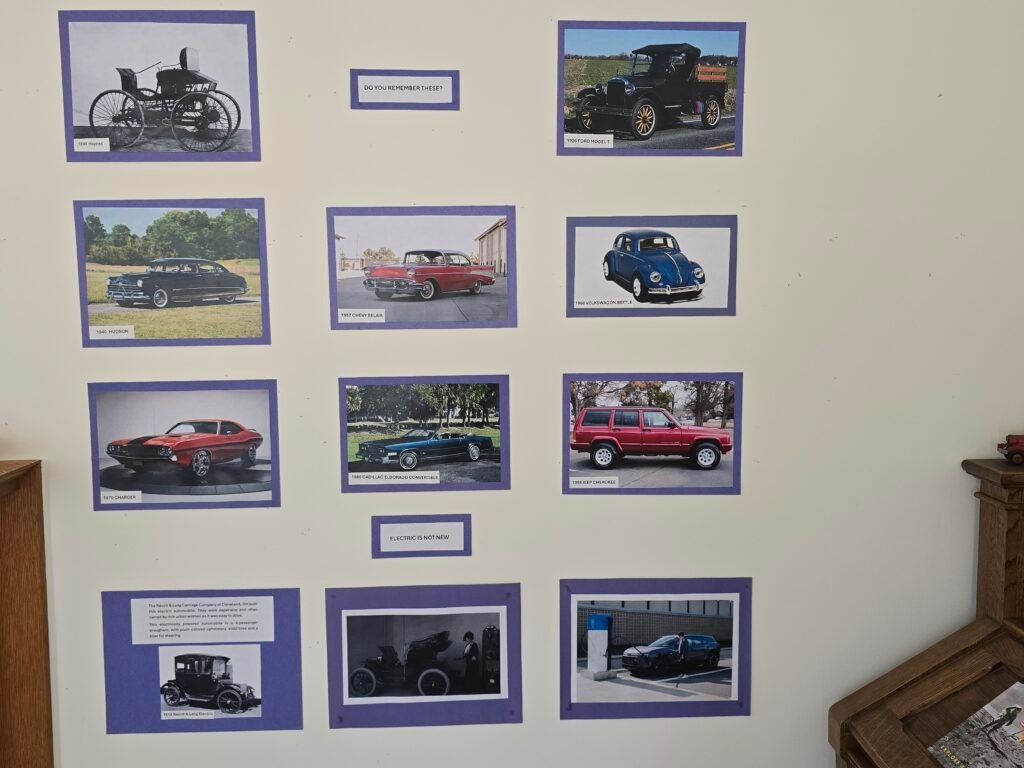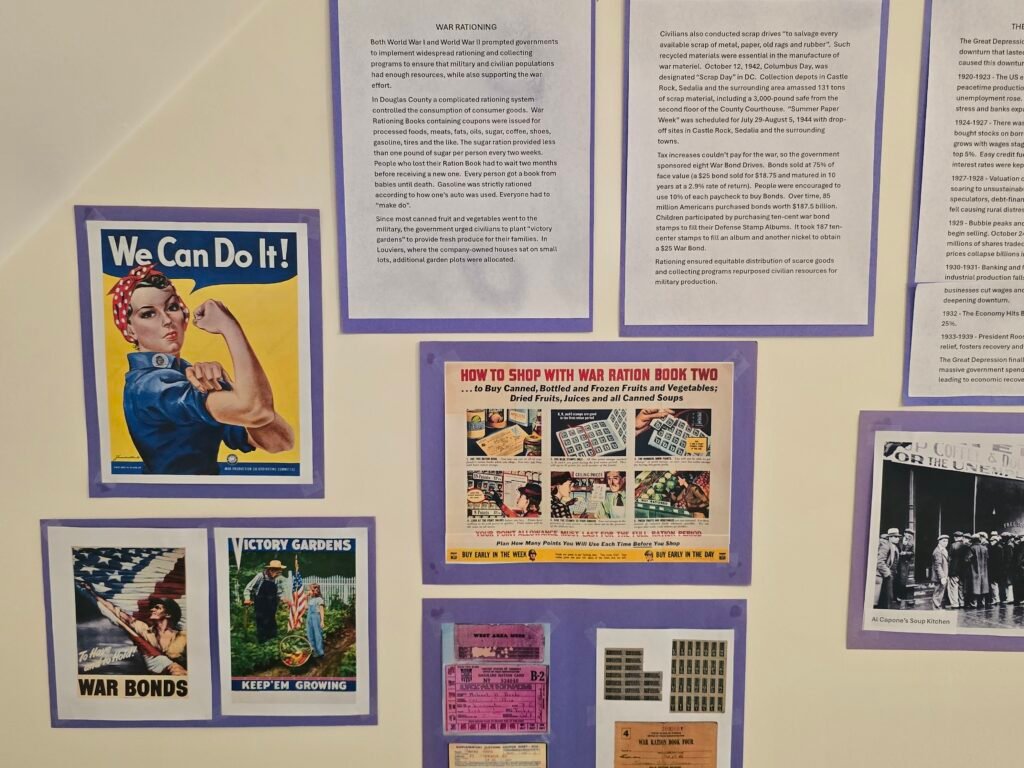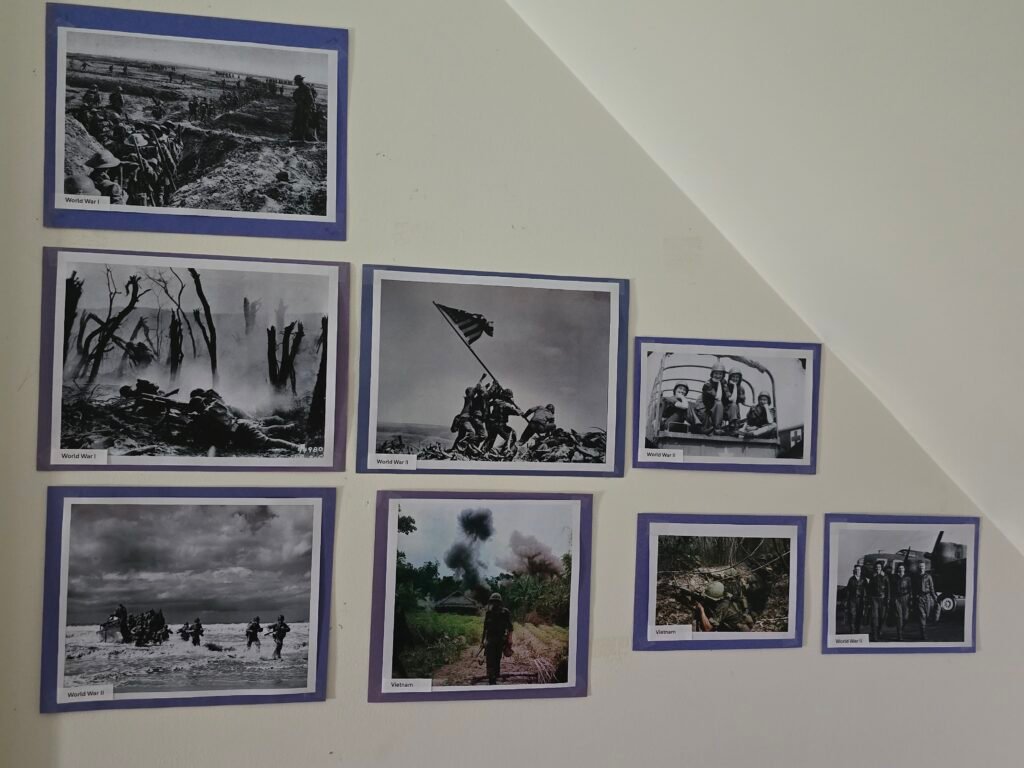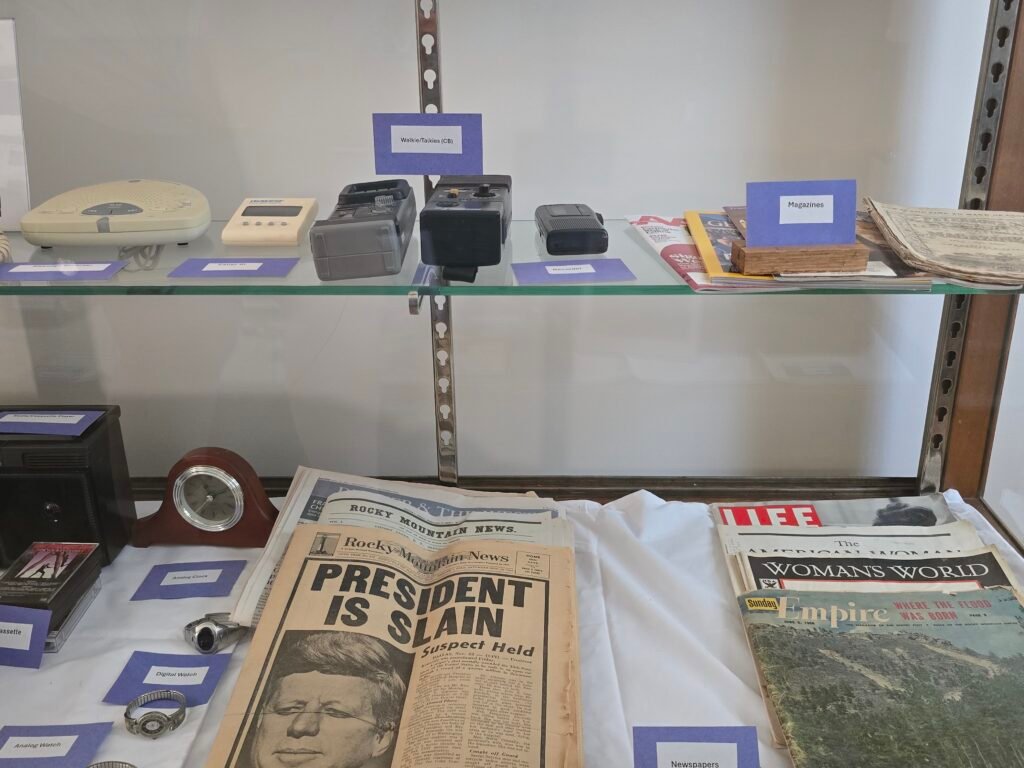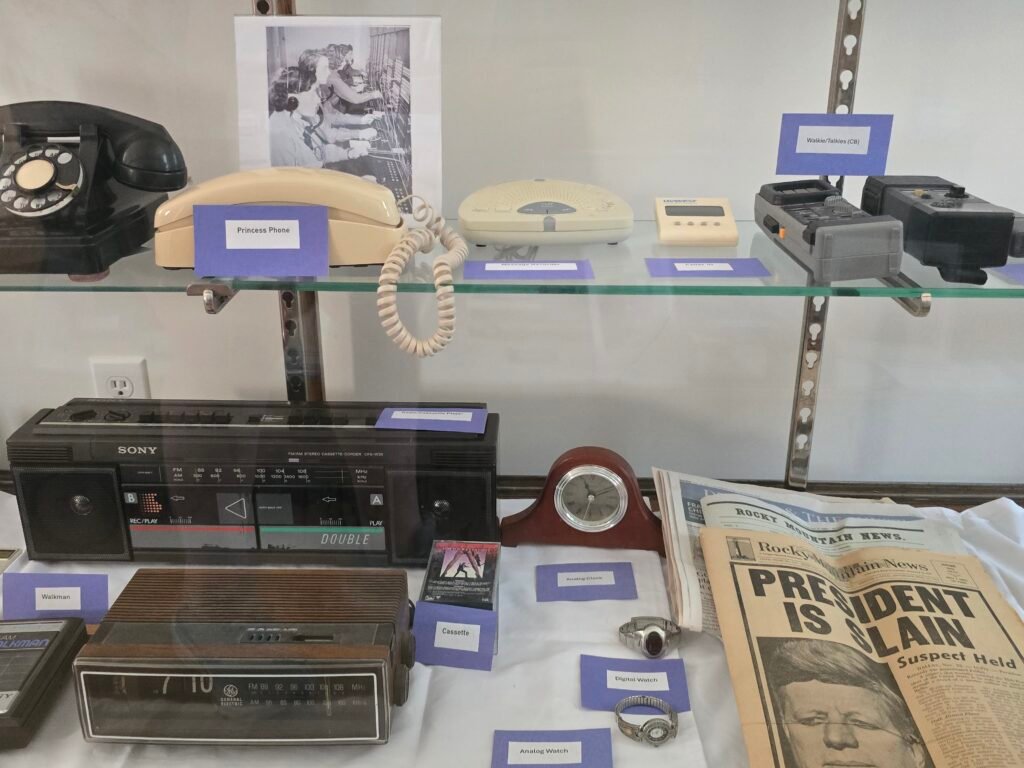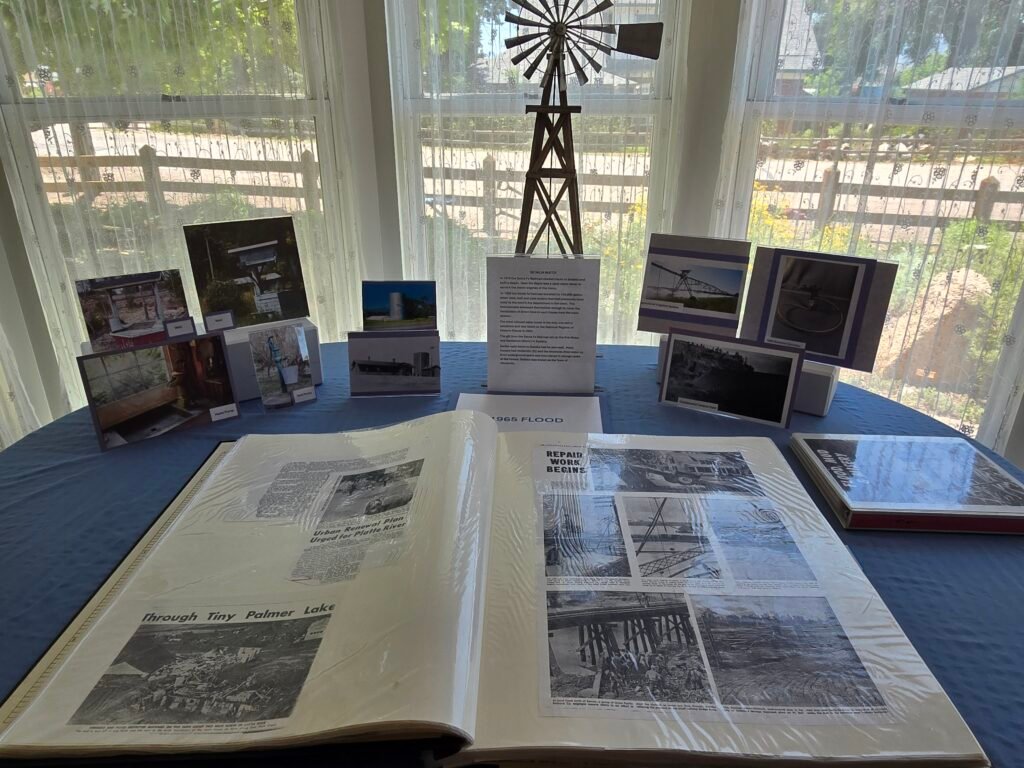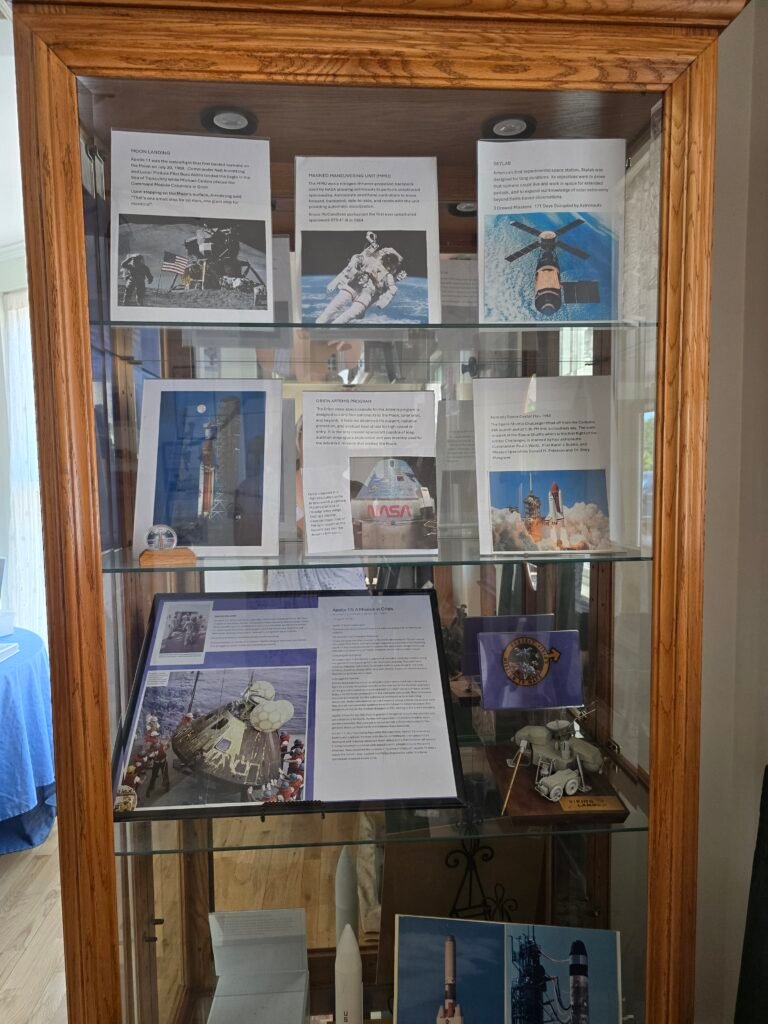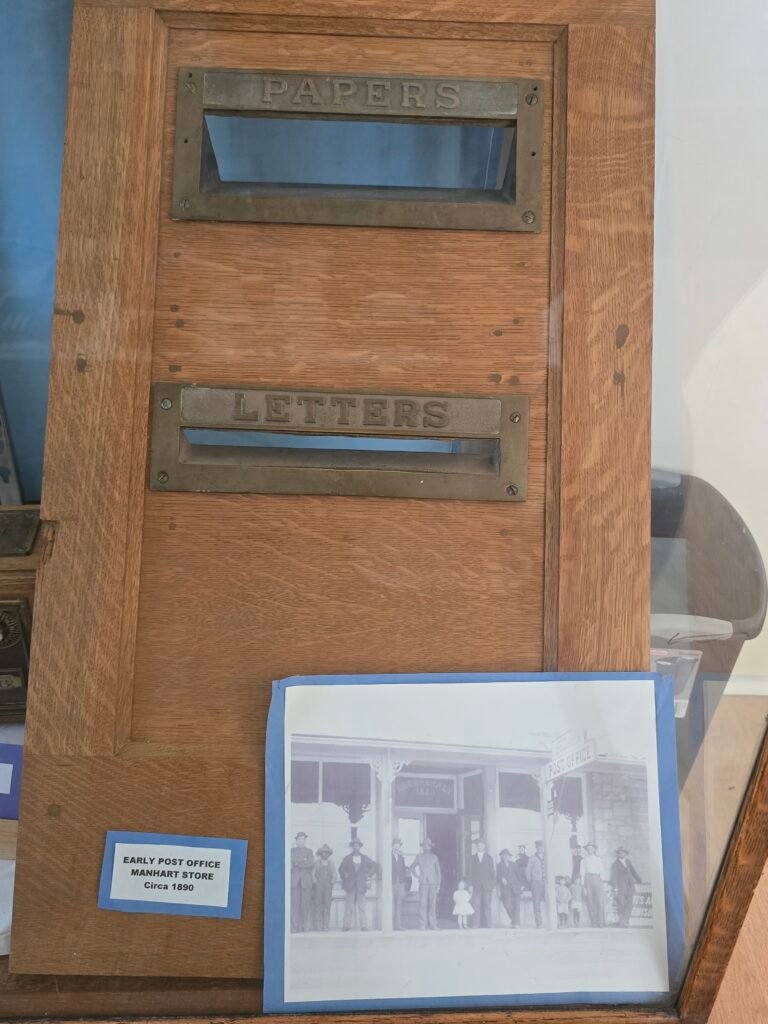
Explore our collections and programs dedicated to preserving Sedalia’s rich history and culture. We have a collection of old letters and photographs, clothing, pioneer home items, tools, and newspaper articles. Our archivist and exhibitor is Mary O’Pry.
Exhibit space in the Museum includes two rooms on the main floor, a balcony area and a separate office, research room, and basement for storage.
Exhibits usually change yearly and include displays of whatever the subject matter is and may include antique clothing, local Indian artifacts, tools, kitchen or washroom equipment, or ranching equipment.
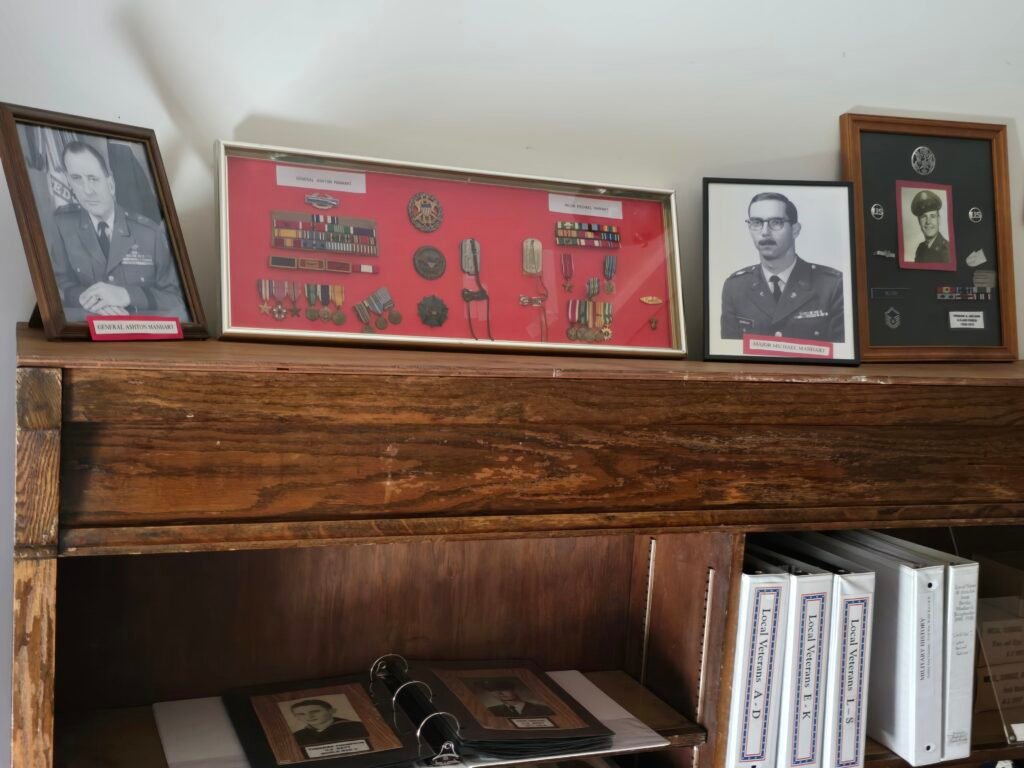
Scrapbooks hold photos of local veterans, an account of the 1965 flood that swept away many Sedalia buildings. Sedalia school pupil pictures, a record of the 2002 Hayman fire, event newspaper clippings from 1898 to 1930, and old cookbooks.
Museum files are available to anyone doing research. In addition, the group identifies historic local landmarks and applies for official designation and researches genealogy and court documents such as land records.
Museum personnel are available to help you with your research or can give you advice on where to go for more information. There is no charge for these services.
This Year’s Exhibit


This year and last year the Museum’s display has been focused on A Day in the Life of a Pioneer 1860-1900. We look at why people came to this area: the Homestead act, wanting a better life, the quest for gold, an adventure – many reasons. The arduous 6–8-week trip by wagon train and then arriving to a place where there would typically be no home, no electricity, no indoor plumbing, no close water, even with a home no stove other than a fireplace to cook on and heat the house. Life was not easy. It was a dawn to dusk existence. The growing season was shorter, there was drought, grasshoppers, hail – a much different growing climate. Women needed to make the clothes, grow the garden, have the babies and take care of the food and family. Men typically had to work at mining, lumbering or helping with expanding irrigation to help make enough money. The same values existed then – school and religion were important. One room school houses, grades 1-8 flourished and people attended church. Many people didn’t make it and turned around and left but the tough ones stayed, and entrepreneurs and ranchers flourished, and we are still successful today.
The following article, A Day in the Life of a Pioneer, was researched and written by Betty Purkey-Huck.
Next Year’s Exhibit
Colorado’s 150th Birthday and the United States 250th Anniversary will be held in 2026. The Museum exhibits and displays will feature what has happened in Colorado in the last 150 years. Associated with the state endeavor History Colorado 150.
Historical Exhibits
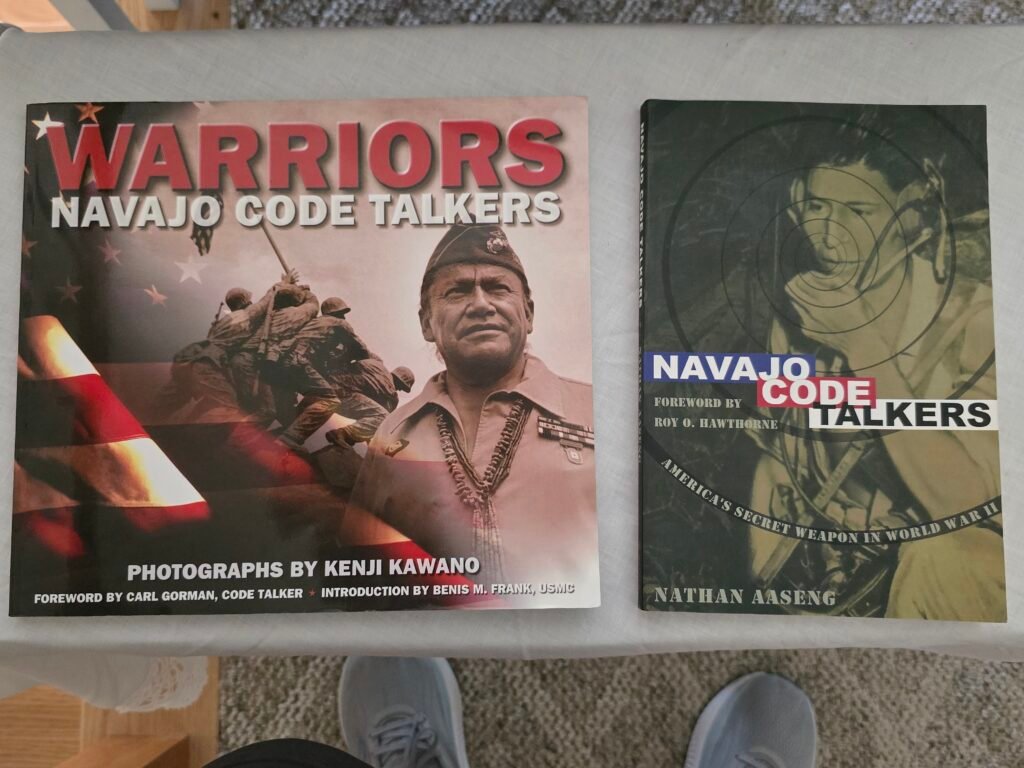
Since the Museum opened several different topics have been subjects of the exhibits. For a long time, we had an exhibit featuring various old-fashioned household and kitchen items on the second floor. We have had a couple of exhibits featuring native Indian tribes. We have also had a lace display, and an exhibit featuring ladies’ hats. Prior to our current display we had an extensive display about the Civil War. There are so many items that make for an interesting exhibit it’s sometimes hard to decide on which one to choose.